
Auditory & Mental Health Solutions
Support Hearing Clarity, Brain Function & Neuro-Sensory Vitality
Ringing in the Ears, Difficulty Following Conversations, Mental Fatigue?
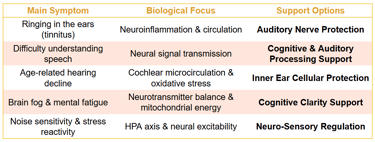
Auditory decline is rarely isolated to the ears. It is often linked to circulation, neural inflammation, oxidative stress, and age-related degeneration of sensory and cognitive pathways.
At Novavibe, we analyze the biological systems that regulate inner-ear circulation, neural signaling, and cognitive clarity — and guide you toward evidence-informed solutions that support these pathways at the root.
Is Your Hearing Quietly Declining — Along With Your Mental Clarity?
Many adults begin to notice subtle but progressive signs such as:
Persistent ringing or buzzing in the ears (tinnitus)
Difficulty understanding conversations, especially in noisy environments
Needing higher volume on TV or phone
Mental fatigue after listening for long periods
Brain fog or reduced concentration
Sensitivity to loud sounds
Feeling socially withdrawn due to hearing strain
Trouble processing speech even when sound is loud enough
These symptoms are not just “part of aging.”
They often reflect neural inflammation, impaired microcirculation, oxidative stress, and declining mitochondrial function in the auditory and cognitive pathways.
Left unaddressed, these processes can gradually affect not only hearing clarity but also memory, attention, and overall quality of life.


What’s Really Happening Inside Your Auditory & Cognitive System
Long-term hearing and mental clarity depend on five integrated systems:
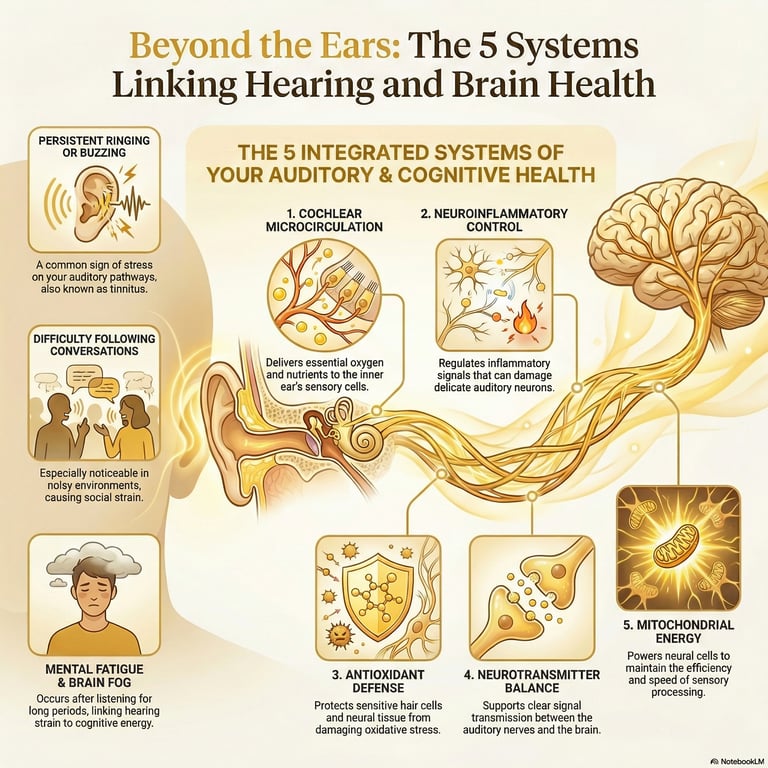
2. Neuroinflammation Control
Regulates cytokines that can damage auditory neurons and synaptic transmission.
3. Antioxidant Defense
Protects hair cells and neural tissue from oxidative stress.
1. Cochlear Microcirculation
Delivers oxygen and nutrients to the inner ear’s sensory cells.
When these systems decline, hearing clarity and cognitive focus deteriorate together.
4. Neurotransmitter Balance
Supports signal transmission between auditory nerves and the brain.
5. Mitochondrial Energy in Neural Cells
Maintains firing efficiency and sensory processing speed.
Which Type of Auditory & Cognitive Support Do You Need?
Every product featured in our Auditory & Cognitive Solutions is reviewed under our Integrative Evaluation Protocol.
You are not buying a supplement here.
You are being referred to a targeted biological strategy.
The following presentations explain how each formula works, for whom it is best suited, and the clinical reasoning behind its design.
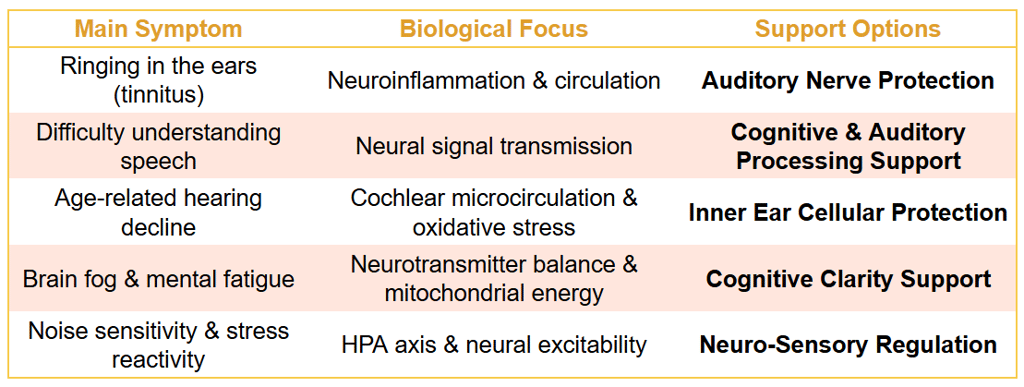
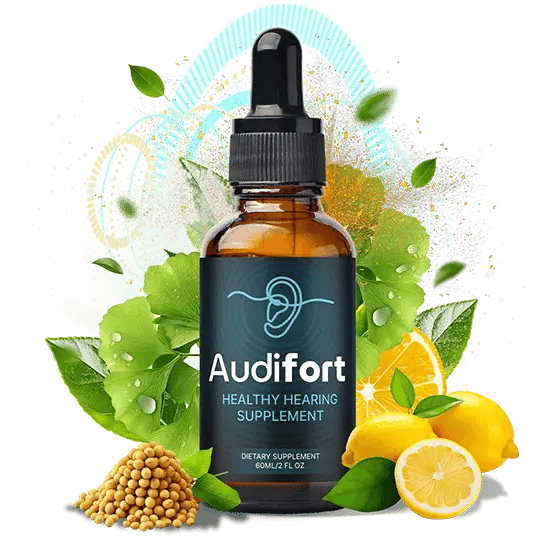
Audifort: Advanced Neuro-Sensory & Inner Ear Support
Best for: Adults experiencing ringing in the ears, reduced hearing clarity, difficulty following conversations, mental fatigue, and early signs of age-related cognitive or auditory decline.
Biological Focus: Inner-ear microcirculation, antioxidant protection of cochlear hair cells, neuroinflammatory modulation, neurotransmitter balance, and mitochondrial energy support in auditory and cognitive neurons.
Key Benefits & Results:
Enhanced Sound Clarity: Supports the health of the auditory hair cells, helping you distinguish sounds and conversations more clearly, even in noisy environments.
Micro-Circulation Support: Formulated to optimize blood flow to the inner ear, ensuring that the auditory system receives the oxygen and nutrients necessary for peak performance.
Neuro-Protective Shield: Rich in antioxidants that defend against the environmental and age-related stressors that can impact hearing over time.
Reduction in Mental Fatigue: By making sound processing more efficient, it helps reduce the "cognitive load," leaving you with more mental energy and focus throughout the day.
Why Novavibe Reviewed It: Auditory decline is strongly linked to reduced blood flow, oxidative stress, and chronic low-grade inflammation affecting both the cochlea and the auditory cortex. Audifort targets these underlying biological stressors, supporting neural resilience, signal transmission, and sensory processing rather than merely masking symptoms.
Option 1 – For Hearing Clarity, Neural Protection & Cognitive Processing
Primebiome: Endocrine Support & Gut Health
Ideal for: Those looking to balance the internal ecosystem that directly influences how the body handles hormones.
Biological Focus: Targets the "estrobolome"—the portion of the gut microbiome responsible for hormonal regulation.
Key Result: Improved hormonal metabolism and reduced internal "stress" on the body’s systems.
Key Benefit: Supports digestive comfort and a balanced microbiome, leading to improved mood and skin clarity.
Why Novavibe Reviewed It: It recognizes that true hormonal health begins with gut-hormone axis synergy and microbial balance.


Option 2 – For the Gut-Hormone Connection
Frequently Asked Questions About Auditory & Mental Health
1. What causes ringing in the ears (tinnitus)?
Tinnitus is often linked to reduced blood flow to the inner ear, oxidative stress, neuroinflammation, and overexcitation of auditory neurons. It can also be influenced by stress hormones, age-related sensory cell decline, and noise exposure.
2. Can poor circulation affect hearing?
Yes. The cochlea relies on very fine microcirculation. Reduced oxygen and nutrient delivery can impair hair cell function and neural signal transmission, contributing to hearing loss and sound distortion.
3. Is hearing loss connected to brain health?
Auditory processing occurs in the brain. Inflammation, mitochondrial dysfunction, and neurotransmitter imbalance can affect both hearing clarity and cognitive focus, explaining why hearing strain is often associated with mental fatigue or brain fog.
4. Why does hearing decline with age?
Aging is associated with cumulative oxidative stress, reduced mitochondrial energy, and microvascular changes that affect both cochlear cells and auditory neurons.
5. Can nutrition support auditory nerve function?
Certain nutrients and botanical compounds support antioxidant defense, microcirculation, and neuroinflammatory balance, which are essential for maintaining normal auditory and cognitive function.
6. Is tinnitus always permanent?
Not always. In many cases it reflects functional stress on auditory pathways rather than irreversible damage, especially when related to circulation, inflammation, or neural overactivity.
7. Can stress worsen hearing symptoms?
Yes. Elevated cortisol and sympathetic nervous system activation can reduce cochlear blood flow and increase neural excitability, intensifying ringing and sound sensitivity.
8. Does supporting the brain also help hearing?
Auditory processing and cognition share vascular, mitochondrial, and neurotransmitter pathways. Supporting overall neurovascular health can benefit both clarity of hearing and mental focus.
9. When should auditory symptoms be medically evaluated?
Auditory symptoms should be evaluated by a healthcare professional if they are sudden, rapidly worsening, accompanied by dizziness, hearing loss in one ear, severe headaches, neurological symptoms, or if tinnitus persists and interferes with sleep, concentration, or quality of life. These signs may indicate underlying vascular, neurological, or inner-ear conditions that require clinical assessment beyond nutritional or wellness support.
The content on this website is for educational and informational purposes only and is not intended as medical advice, diagnosis, or treatment. Novavibe – Integrative Wellness Center does not replace professional medical care. Always consult a qualified healthcare provider before starting any supplement or wellness program.
Some products featured on this site are promoted through affiliate partnerships. This means Novavibe may receive a commission if you choose to make a purchase, at no additional cost to you. These partnerships do not influence our educational standards or content integrity.
This website may use cookies, pixels, and similar technologies for analytics, advertising, and marketing purposes, including personalized content and remarketing. By using this site, you consent to the collection and use of data in accordance with our Privacy Policy.
Statements about dietary supplements have not been evaluated by the Food and Drug Administration and are not intended to diagnose, treat, cure, or prevent any disease.